As a global independent power producer, we are always looking at improving how we develop, build and operate projects. Since our early beginnings, we have had an innovative spirit; it’s part of our DNA.
Our in-house experts, including our engineers, data scientists, developers and power marketing teams, continually explore innovative solutions to unlock new renewable energy opportunities and solve challenges to meet the growing global energy needs.
Efficient project execution
Lightsource bp drives the global energy transition by leveraging artificial intelligence, predictive data analytics, and advanced engineering to optimise the development, construction and operational performance of utility-scale renewable energy and battery energy storage systems (BESS).
We utilise our dedicated Applied AI team to transition solar asset protection and management from manual, reactive tasks to autonomous, data-driven methodologies.
Lightsource bp is piloting onsite battery storage which has the potential to significantly reduce scope 2 carbon emissions from specific solar sites, demonstrating how innovation can drive both environmental and financial value.
Case Study
Decarbonisation through innovation
Lightsource bp is pioneering onsite battery storage which has the potential to nearly eliminate scope 2 emissions from specific solar sites, demonstrating how innovation can drive both environmental and financial value.
Solar sites require continuous power for essential overnight operations – security systems, SCADA monitoring, and permanent equipment loads like transformers – currently met entirely by grid imports. This overnight electricity consumption represents a significant portion of scope 2 emissions from our solar portfolio.
Our Innovation team has developed a small-scale onsite battery solution charged by solar PV during the day to meet the site’s overnight power demand. This simple solution is designed to reduce electricity imports by 95%, nearly eliminating scope 2 emissions from solar assets.
The project will be piloted at a UK site connected to the distribution network during 2026. If technical and financial viability can be proven, the pilot may be expanded to other existing sites from early 2027 onward, before future deployment to new-build sites.
This lever represents a transformational opportunity to nearly eliminate scope 2 emissions from some of our PV assets, with capital costs recoverable in a short period. It exemplifies how innovation can unlock sustainability progress alongside sound business economics.
Case Study
Adaptation in action – hail monitoring and response
At our 27.5 MWp Johnson Corner solar site in Kansas, proactive hail monitoring and rapid operational response helped protect safety, performance and long-term value.
In June 2025, a severe hailstorm hit our 27.5MWp Johnson Corner solar site in Kansas with hailstones up to 2 inches (5.1 cm) in diameter and wind gusts over 40 mph. Hail of this magnitude can cause extensive damage to PV modules, with extended downtime, creating costly repairs and lost revenue. But this time it didn't.
The Risk
Research by Raupach et al. (2021)24 indicates that while hail frequency may decline in some regions, increases in low-level moisture and convective instability may favour more intense thunderstorms and potentially more severe/larger hail in most regions. This increased volatility means operating assets must be prepared for rapid-onset, severe weather events.
The Response
Using our integrated Whiskey Ball hail mitigation technologies, policies and procedures, we stowed the modules in the most protective position around an hour before forecasted impact. The hail arrived 15 minutes early, reinforcing the value of proactive action.
The Outcome
Post-storm reports confirmed 2-inch hail near the site, yet site inspections at Johnson's Corner found fewer than 100 of 75,000 modules (0.13%) suffered damage. Our Whiskey Ball protocol helped protect the asset's long-term value and insurance outcomes, supporting our strong reputation for proactive risk mitigation and resilient operations.
The event at Johnson Corner solar farm highlighted an important reality for operating assets: hazards can develop quickly, forecasts can change, and resilience depends on having the right tools, processes and decision-making in place before an event occurs.
“
Lightsource bp's early-stage, multidisciplinary collaboration – incorporating external stakeholders – enhances its ability to optimize risk mitigation, risk financing (including insurance), and overall project returns.
Danny Seagraves
Global Energy & Climate Tech Leader, Brown & Brown RS Insurance Services, LLC (B&B Risk Solutions)
Project Whiskeyball
Extreme weather events are increasing operational risks for many sectors globally. A specific risk facing solar farms in some locales, is damage to solar modules from very large hail stones – or as we call them, 'whiskey balls'. Faced with a challenge – we sought an innovative solution. We developed our comprehensive hail mitigation programme, Project Whiskeyball, integrating engineering, advanced predictive meteorology and machine-to-machine automation – transitioning asset protection from a manual, reactive process to an autonomous data-driven methodology.
At Lightsource bp, our approach is to work smarter: combining the expertise of our people with evidenced-based decision-making to protect long-term asset value, Project Whiskeyball, is one of the most advanced examples of this in action. Read the Johnson Corner case study to see how our integrated hail mitigation approach worked in detail and what this means for resilient asset management.
With our in-house battery storage tool, we've developed software algorithms that calculate multiple real-time variables to determine optimal battery charging and discharging cycles.
New technology deployment
Our teams assess the commercial application of new technologies like energy storage, hybrid solutions, floating solar, Green Hydrogen and off grid systems. Additionally, while AI and computer modelling plan an important decision-making role, real world pilots are a critical part of our process to testing the success of new technologies.
Hybrid and tribrid solutions
Hybrid and tribrid energy systems combine solar, onshore wind and battery storage. By balancing supply and demand in real time we can help enhance grid stability and resilience, optimising energy output across multiple technologies.
Solar deployed on water bodies unlocks new locations and benefits from improved panel efficiency through natural cooling, supporting integrated water and energy management strategies.
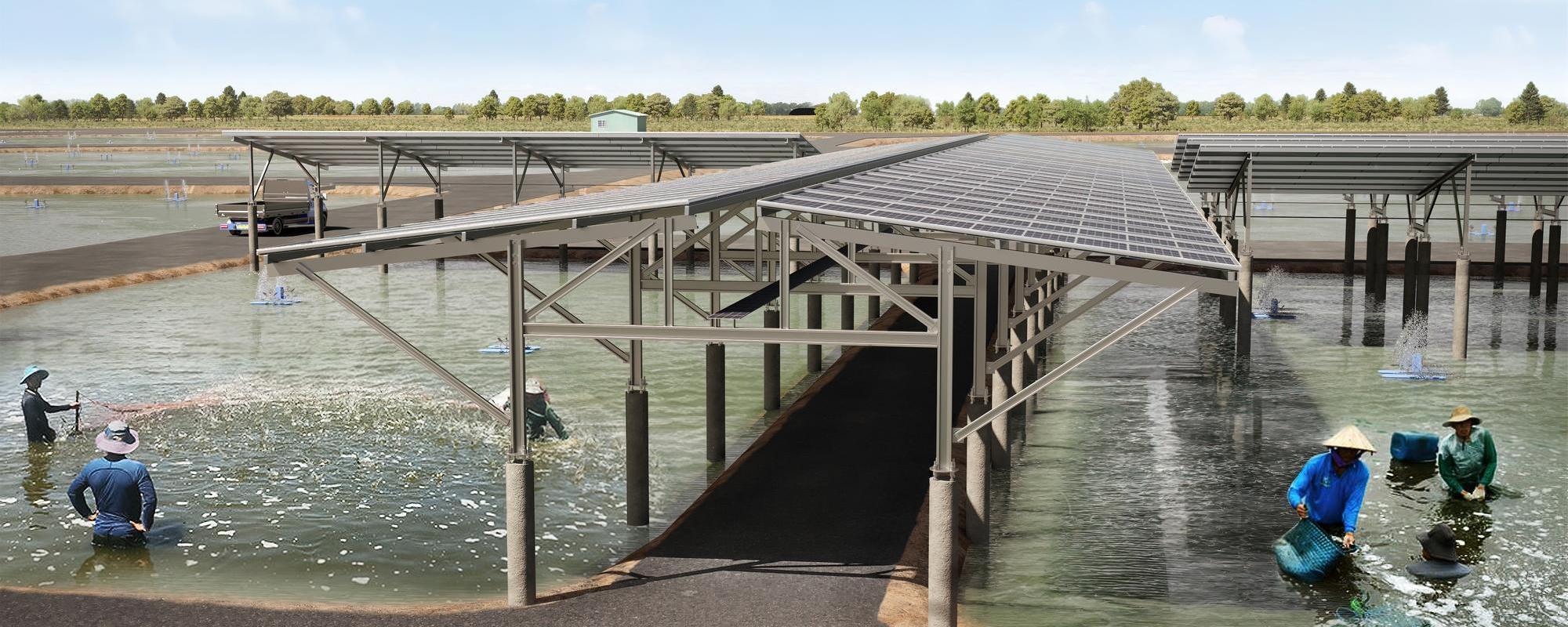
Agrivoltaics is the co-location of solar and agriculture and aquavoltaics combines solar with aquaculture. Through our innovative approach to multi-use solar projects, we have been an early adopter of both solutions to support ongoing agri-and aquaculture production alongside delivering local, reliable sources of low-carbon power – all at the same time.
We provide and manage innovative, flexible and hybrid assets and working with leading market experts around the world to provide commercially competitive solutions.
Data center integration
We are enabling direct renewable energy solutions for data centres. Through co-location, behind the meter supply and tailored energy purchase structures, we help power high-demand operations with reliable, renewable energy.
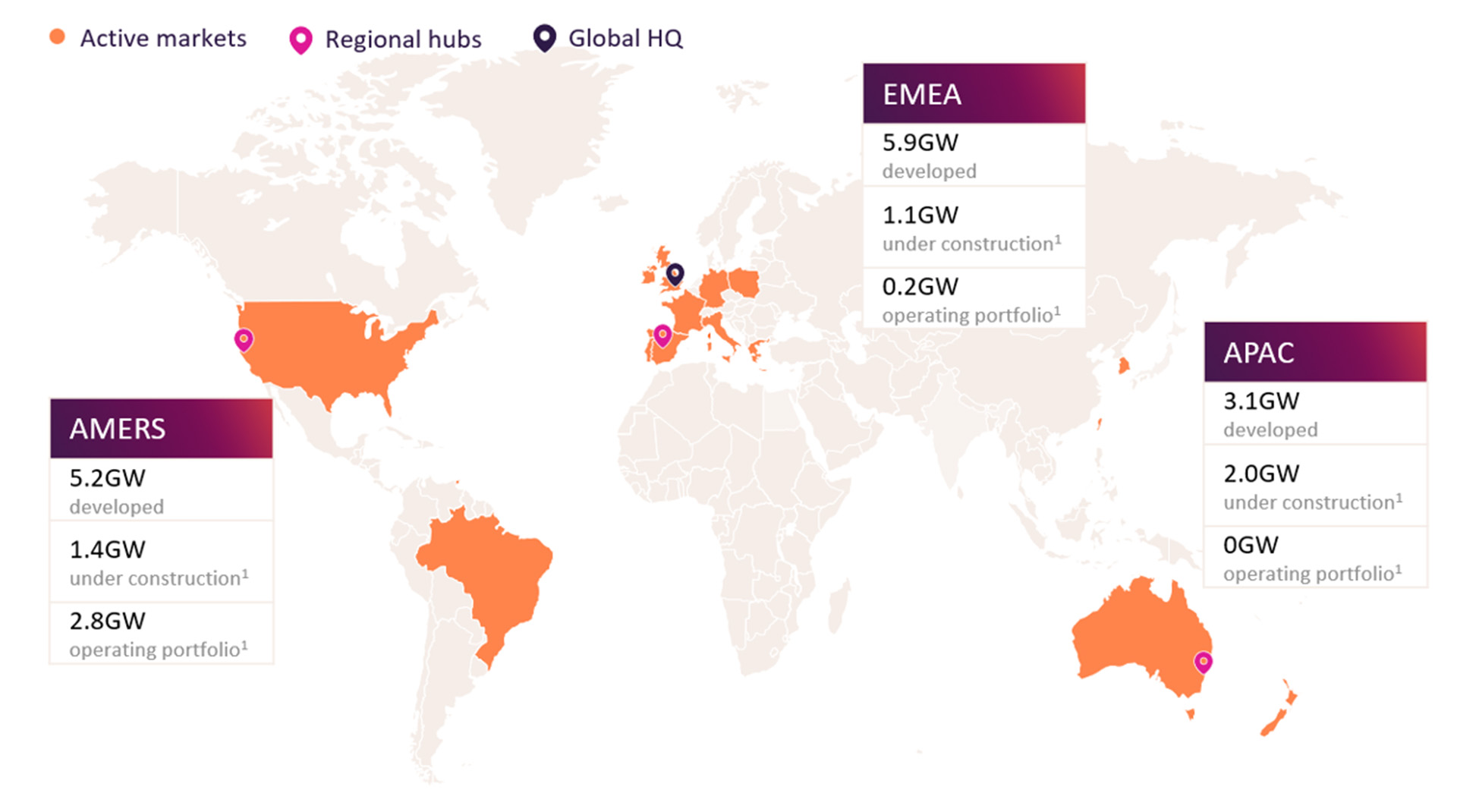
Note 1: 1.6 GW of total, finalised development in December 2025 and are ready to start construction. Operational projects and projects in construction, Gross Lightsource bp ownership.